

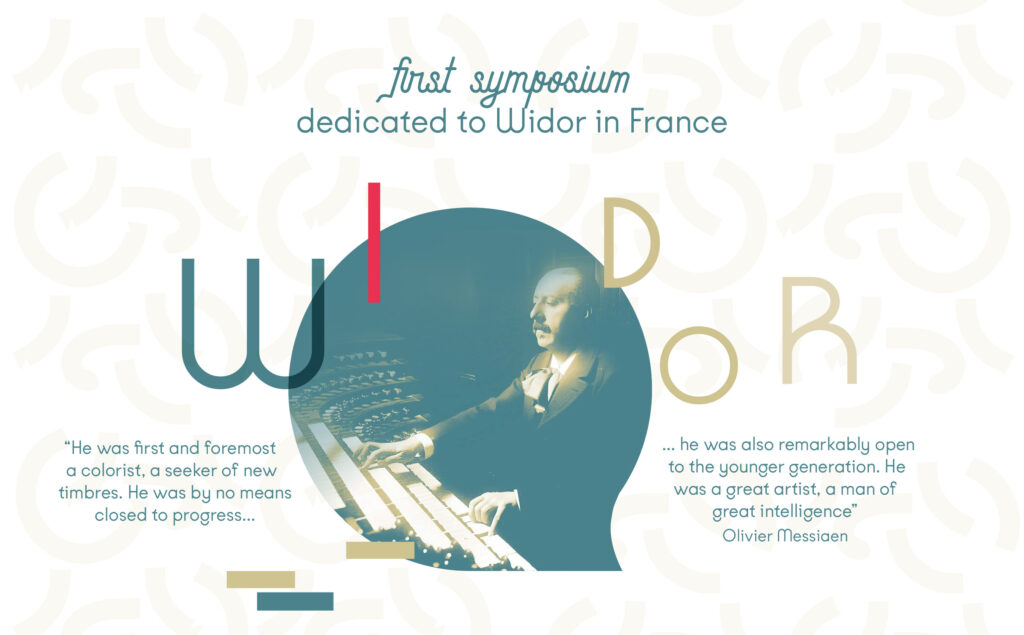
Charles-Marie Widor, biographical elements
Composer, pianist, virtuoso organist, Charles-Marie Widor (1844-1937) was a major figure in music during the French Third Republic. He embodied a French art that resonated internationally.
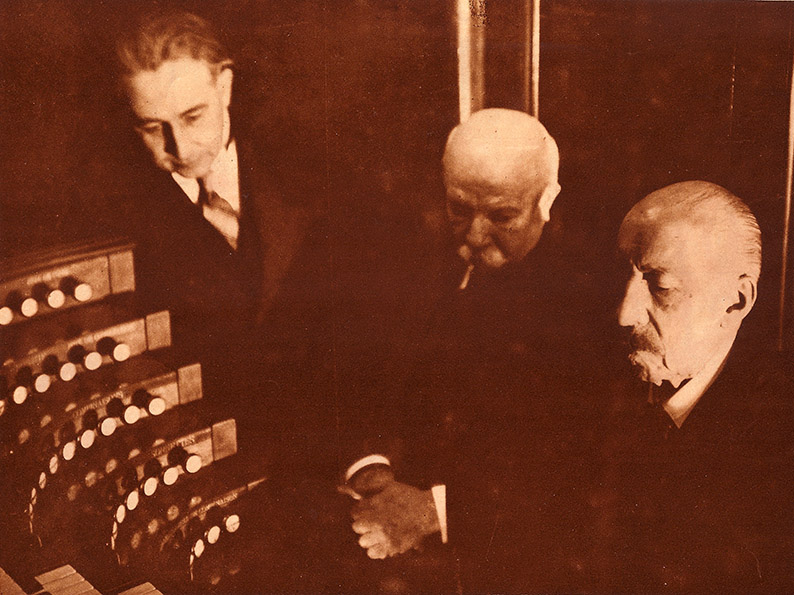
Some of his friends and contemporaries…
Why a symposium on Charles-Marie Widor in 2027?
The year 2027 will mark the 90th anniversary of the composer’s death. It offers an opportunity to celebrate his work, but also to present the latest historical and musicological research devoted to him. The last major conferences on Widor were held in the United States, at Yale University in 1987 and at Princeton University in 2002; yet none has ever been organized in France.
This first major conference in Paris will bring together musicologists, scholars from various disciplines, archivists, and musicians, in order to explore all facets of this towering figure of French musical life: composer (including works for the stage and orchestra), eminent performer, pedagogue, critic, writer, and Permanent Secretary of the Académie des Beaux-Arts. For although the organist-composer is well known even to non-specialists (thanks to his iconic Organ Toccata, the symphonic counterpart to Bach’s), Charles-Marie Widor remains a personality who left a mark on his era far beyond his role as musician and teacher: a true cultural ambassador of France.
For this Widor 2027 conference, organist and musicologist Denis Tchorek (IReMus) has assembled a distinguished scientific committee. In addition to scholarly papers, the conference will offer chamber music performances, guided walks through Paris at the addresses where Widor lived or worked, exclusive visits, and evening concerts at Saint-Sulpice Church and on its great organ, whose console Widor occupied for nearly 64 years.
As Isidor Philipp, the great pianist and friend of Widor, wrote:
[His Organ Symphonies] have lost none of their freshness or interest, and they continue to appear on every organist’s program. But he did not write only for the organ: how many beautiful pages are found in his piano works, in his chamber music -violin and cello sonatas, trio, quartet, and quintets- in his symphonies (the sacred symphony and the antique symphony with choir), in his concertos and his piano fantasy, in the cello concerto, in his sacred music, in his operas: Nerto (Opéra), Maître Ambros and Les Pêcheurs de Saint-Jean (opéra comique), in the pantomime Jeanne d’Arc, in La Korrigane, that delightful ballet premiered in 1880 and still in the Opéra’s repertoire, and in his charming music for Dorchain’s Conte d’Avril.
Isidor Philipp
Is this not astonishing fecundity?
He expresses himself in a learned and refined language. He detests ugliness and needless audacity. His piano writing is fresh and original. In Les Pêcheurs de Saint-Jean and in Nerto -one recalls the Avignon act- there are pages of great dramatic beauty. The symphonies are works of consummate art. His chamber music, his concertos, his fantasy, deserve -through the elegance of their style and the perfection of their writing- to be placed alongside the works of Saint-Saëns.
“Charles-Marie Widor”, Le monde musical, l’orgue et les organistes,
31 mars 1937
An initiative of AROSS

Founded in 1991 at the initiative of Daniel and Odile Roth, the Association for the Promotion of the Aristide Cavaillé-Coll Organs of Saint-Sulpice Church in Paris (AROSS) aims to introduce, develop, and strengthen public awareness of the Saint-Sulpice organs by organizing concerts, masterclasses, and educational activities for school groups.
Saint-Sulpice Church in Paris houses two exceptional musical instruments built by the renowned organ builder Aristide Cavaillé-Coll (1811–1899). Preserved in their original aesthetic state since their construction, the choir organ (1858) and the great organ (1862) are irreplaceable witnesses to their creator’s art and constitute one of the most important ensembles of the world’s organ heritage.
The great organ is the largest instrument ever built by Cavaillé-Coll (102 stops on five manuals and pedalboard). Incorporating a substantial portion of the earlier organ by François Henri Clicquot (1781), it is listed as a Historic Monument for both its casework and its instrumental components. Albert Schweitzer described it as “the most beautiful organ in the world.”.
Saint-Sulpice Church is, of course, an ideal place to pay tribute to Charles-Marie Widor, who distinguished himself at the great organ for nearly 64 years (!), from January 1870 until his retirement in December 1933. The Aristide Cavaillé-Coll great organ -inseparable from Widor’s musical language- has thus become the privileged instrument for the performance of his works.
Past actions of AROSS to promote Widor:
Auditions and concerts
Many organists -both titular and guest performers appearing at this console- have chosen to honor the master of the Organ Symphony in their programs, whether during parish Masses, the traditional Sunday “auditions,” or the major concerts organized by AROSS.
A quick look through AROSS’s program archives is enough to confirm it…
Recordings
To celebrate Widor’s musical legacy at Saint-Sulpice, AROSS has initiated and supported a series of in situ recordings highlighting the composer, including his Messe, Op. 36 (JAV CD, 2005; reissue 2025), several motets (Spektral CD, 2019), and his Trois nouvelles Pièces, Op. 87 (Aeolus CD, 2025).
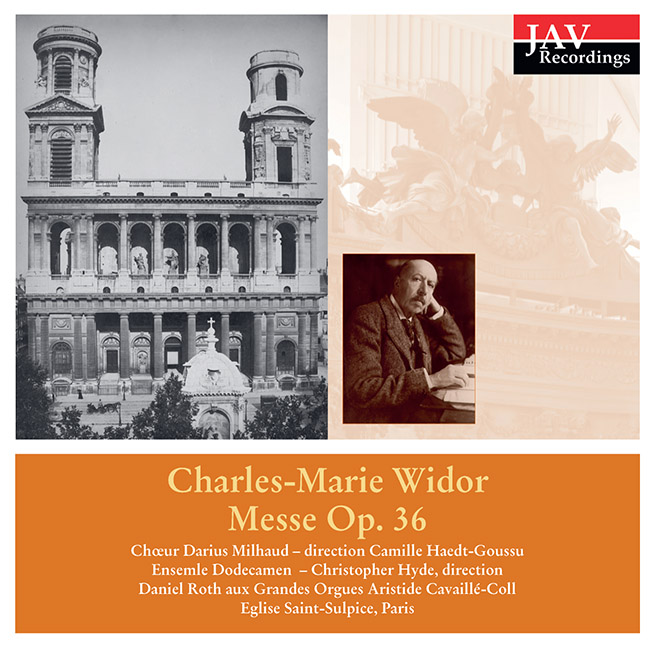
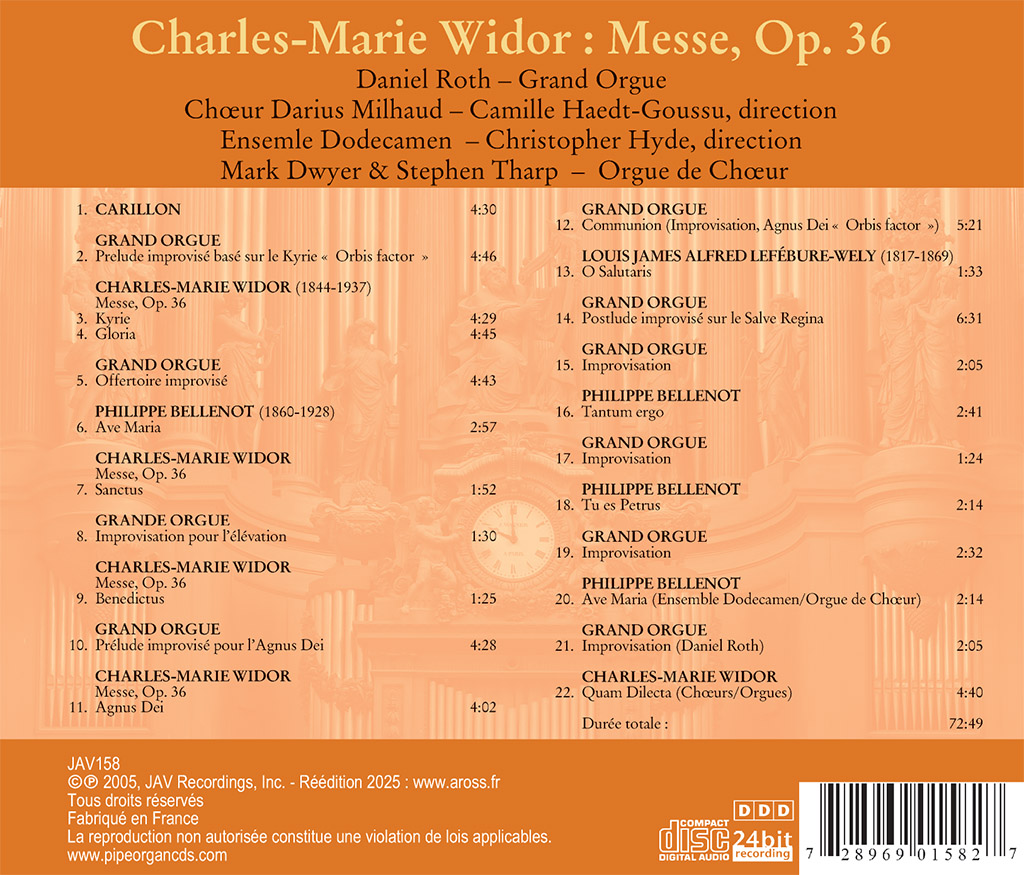
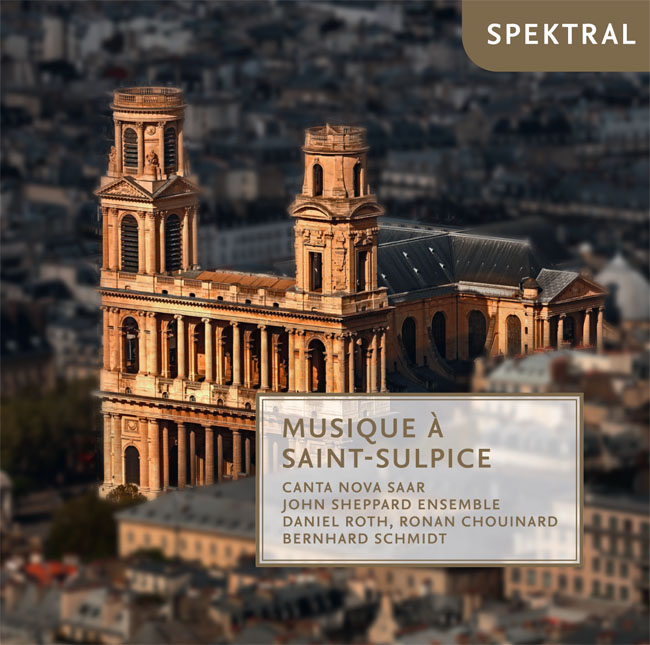
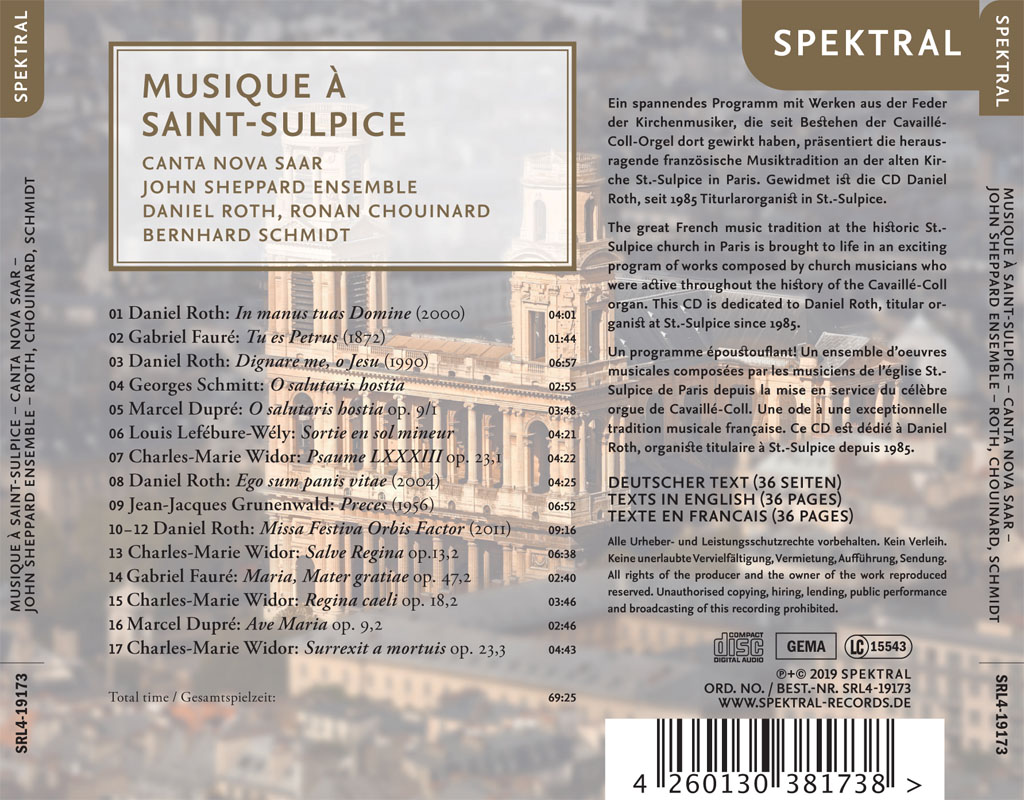
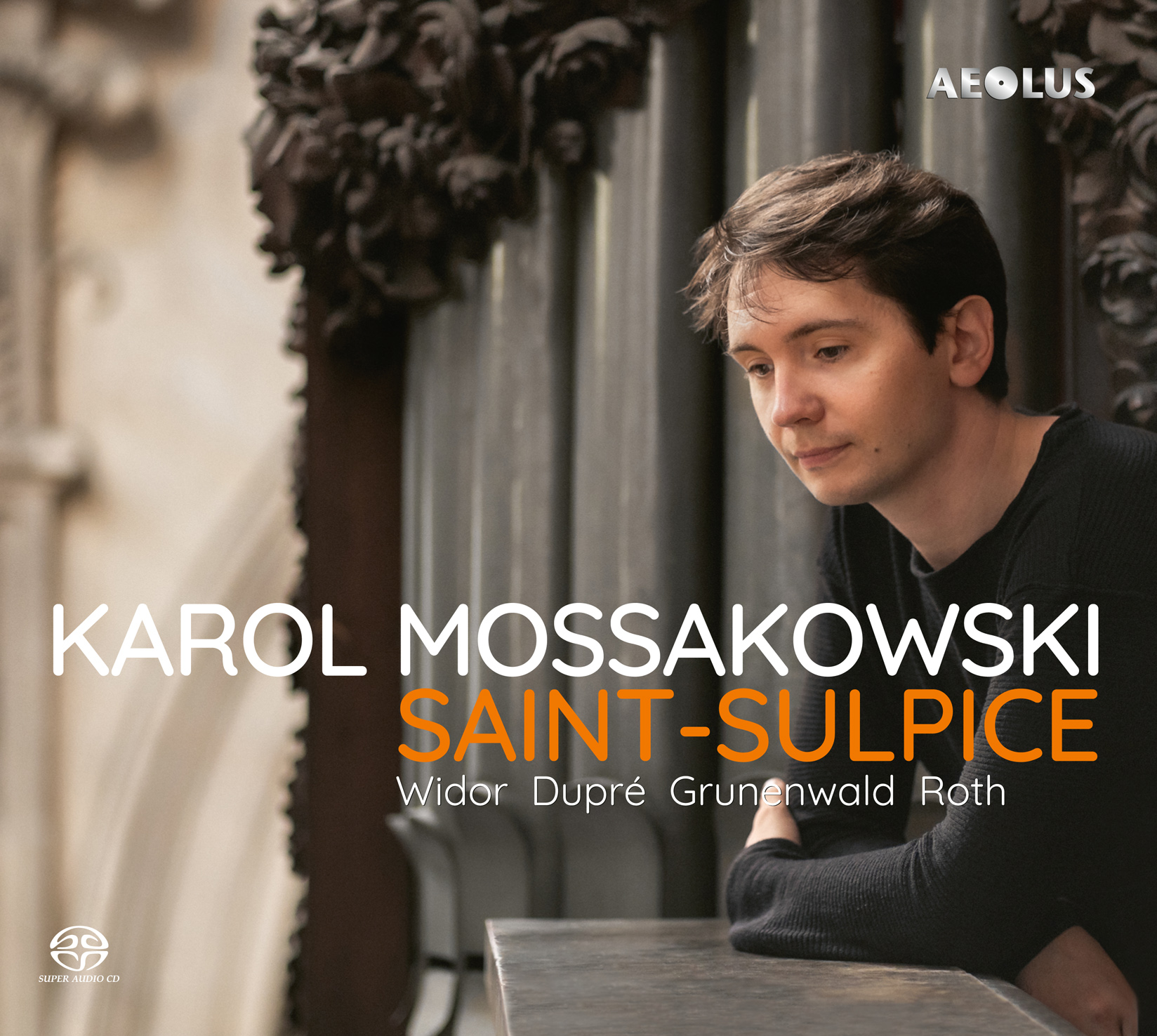
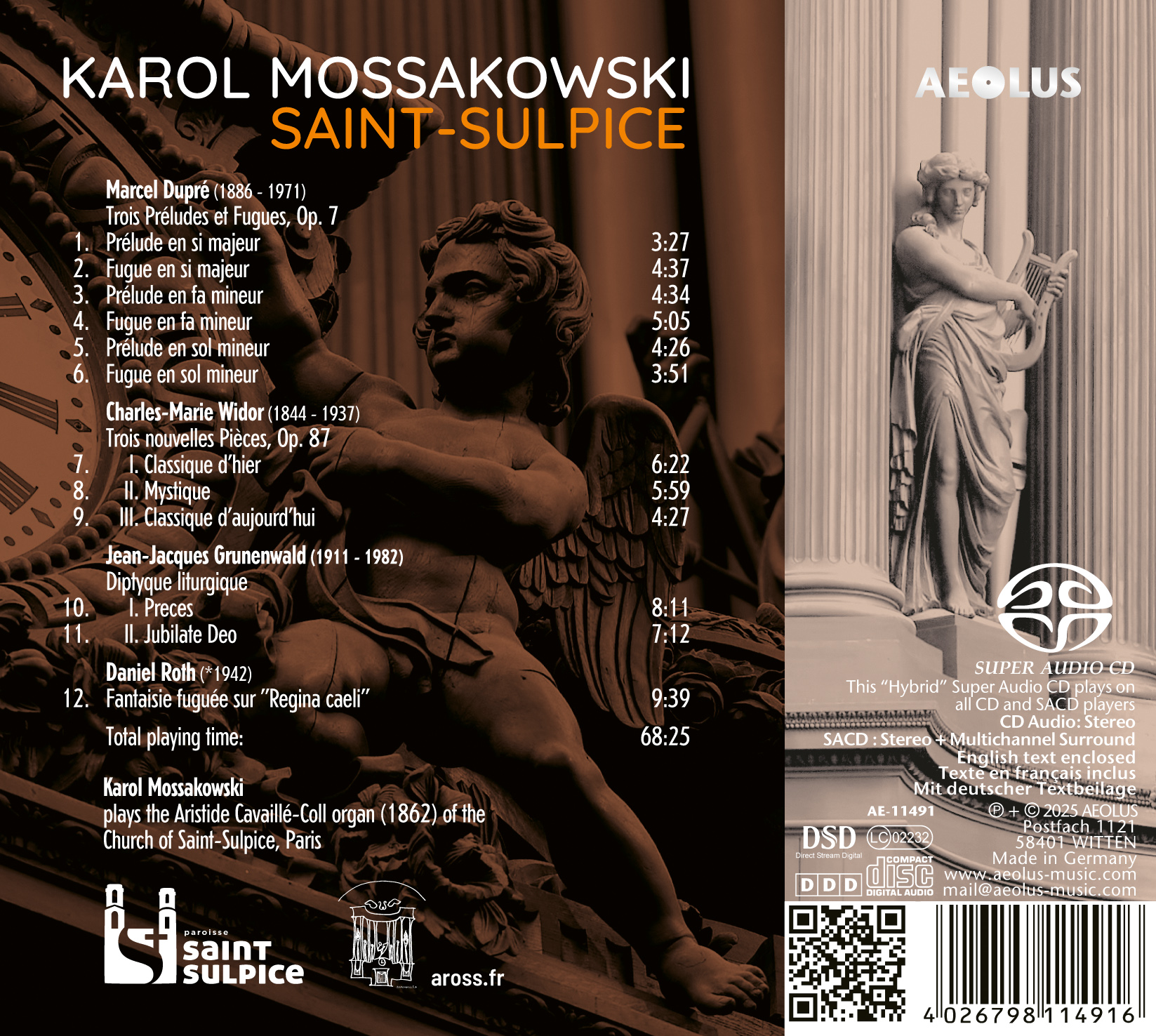
Descriptions and excerpts are available in our Shop:
Communications
At the very beginning of 2019, the Historical Society of the 6th Arrondissement paid tribute to Widor -who had been one of its members- through a series of lectures and concerts co‑organized with AROSS:
>> the Widor series, January-February 2019
The conference proceedings (in French) were published in the bulletin of the Historical Society of the 6th Arrondissement (new series No. 32 – 2019) and also issued as a separate offprint, available through our association:
Widor’s Solemn Mass, an XXL concert
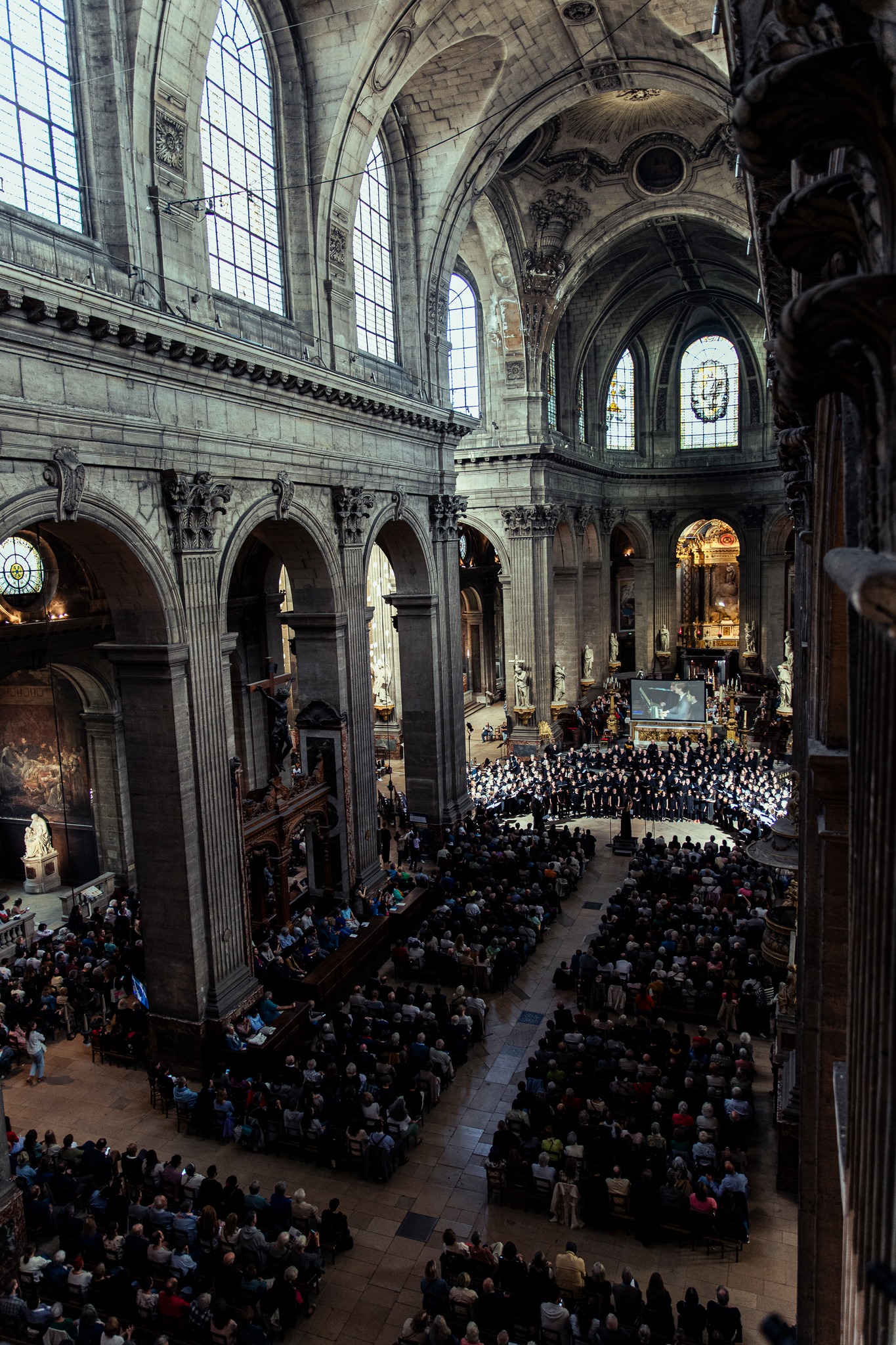
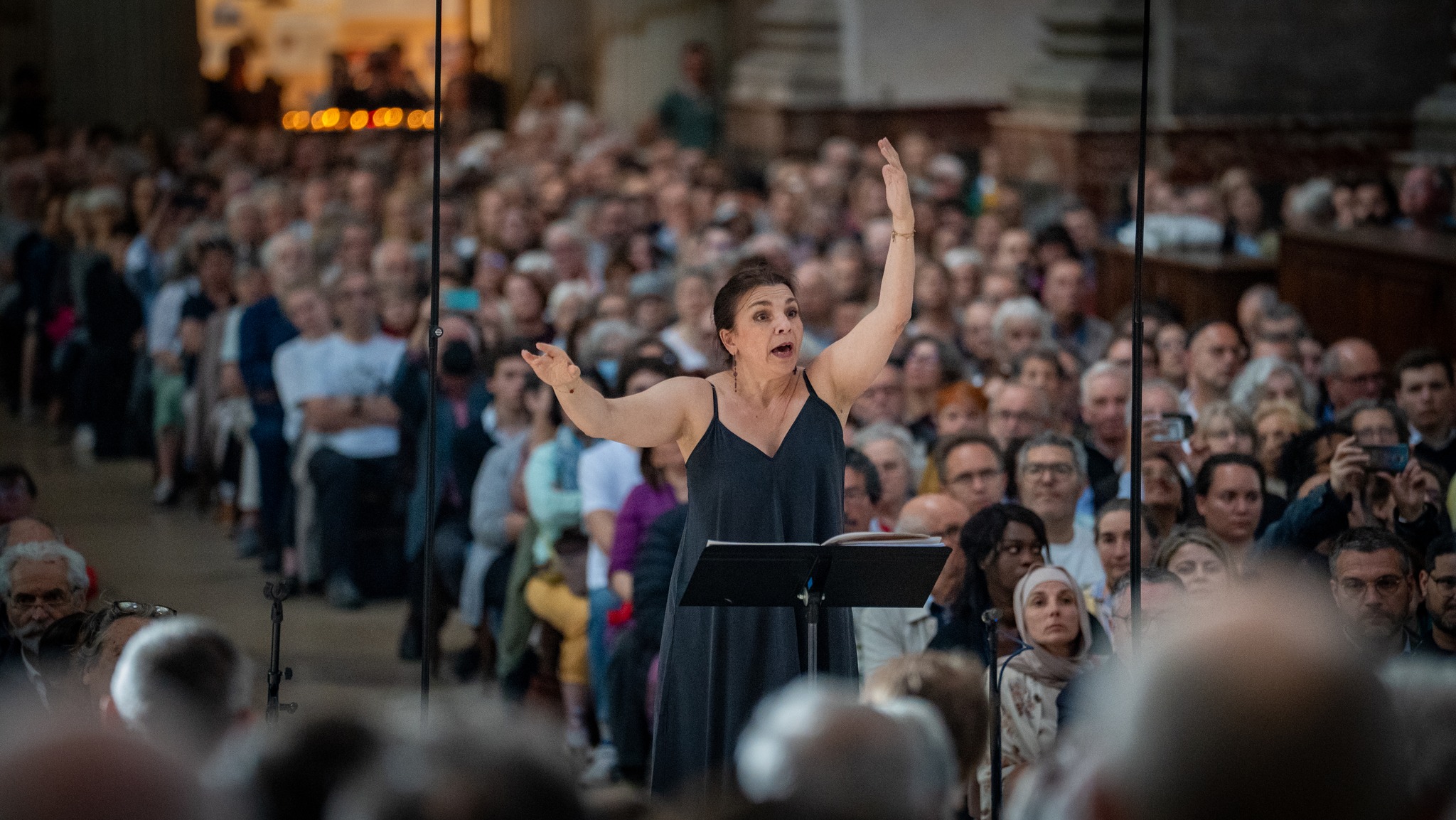
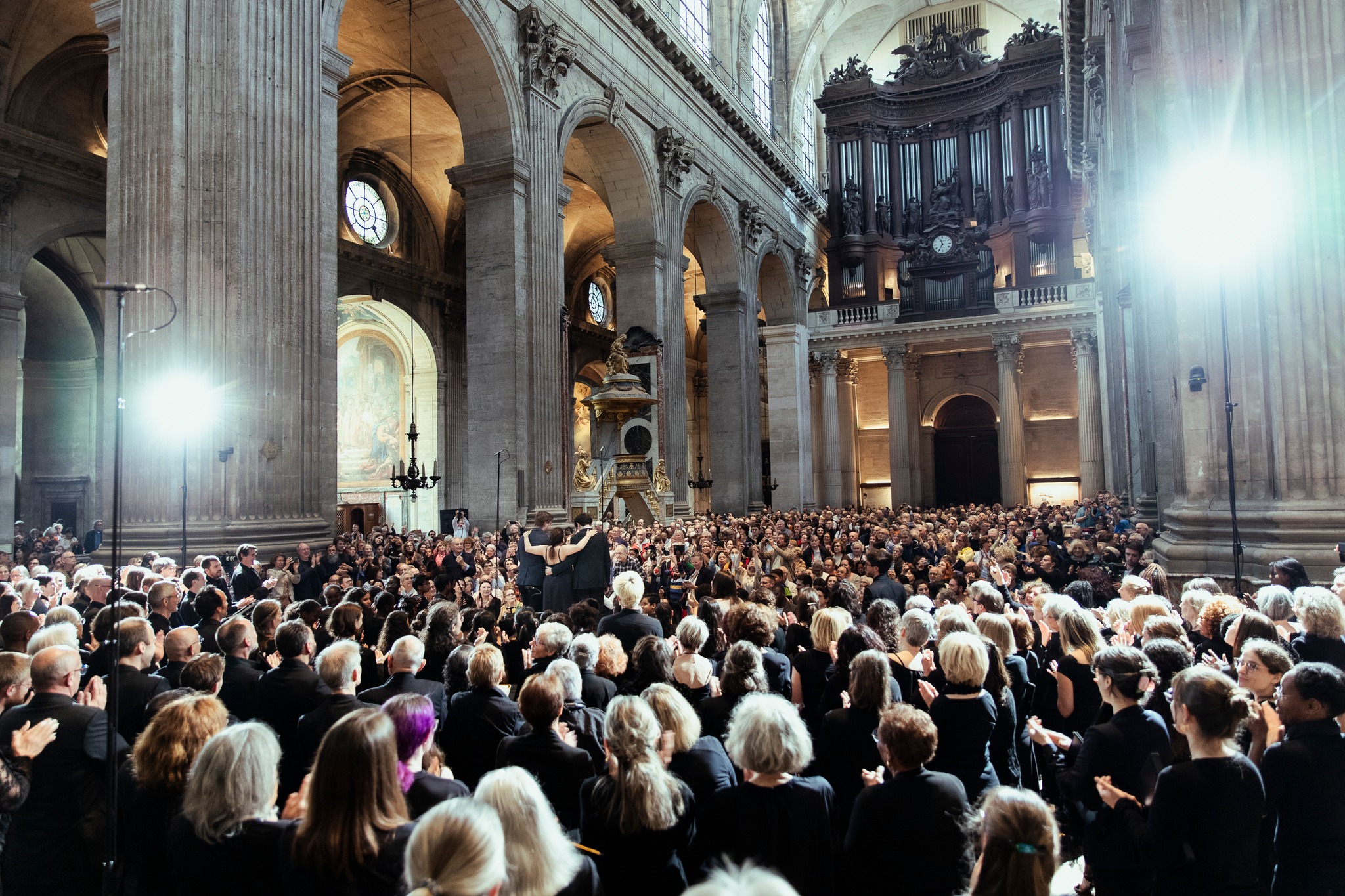
On 18 May 2025, an exceptional concert was given at Saint-Sulpice, organized by AROSS, bringing together 250 choristers before an audience of 2,500 people, for Widor’s Mass for Two Choirs and Two Organs, Op. 36. The event was broadcast live on Youtube.
- The event concert (information, program, and video link)
- Photos of the dress rehearsal and the concerts
Creations
In February 2022, AROSS released the short film Le réveil de Widor, directed by Paul-Anthony Mille. A dreamlike journey into the depths of the great organ of Saint-Sulpice…
A journey inside the great organ of Saint-Sulpice and its many pipes, which must be regularly tuned. The meticulous work of a man in the shadows, whose precise gestures can awaken certain sleeping souls and thus bring great music to life once again.
Directed by: Paul-Anthony Mille, Kafard Films
Produced by: AROSS
Soundtrack: L’Enfant noir by Jean-Louis Florentz, performed by Alexis Grizard on the great organ of Saint-Sulpice.
With the kind permission of the Parish Priest of Saint-Sulpice and the City of Paris.