

Call for Papers
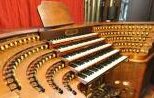
Ninety years after the death of Charles-Marie Widor, his name still evokes the organist of Saint-Sulpice, the perpetual secretary of the Academy of Fine Arts, and the prolific composer whose monumental work, however, remains little known. This representation almost erases the versatility of his career as a musician, as well as the prominent role he played in French musical life under the Third Republic..
The international symposium Charles-Marie Widor (1844-1937), musician and cultural ambassador, aims to offer a fresh perspective on Widor, who in his time embodied a French art that shone internationally – whether through his personality, his career, his work beyond the organ, his writings, or his legacy – by encouraging research that can deepen knowledge about him and proposing new avenues of study.
SCIENTIFIC COMMITTEE
Sylvie DOUCHE (Sorbonne University – IReMus)
Katharine ELLIS (University of Cambridge)
Fabien GUILLOUX (CNRS – IReMus)
Emmanuel REIBEL (CNSMDP – ENS Lyon)
Marie-Gabrielle SORET (BnF – IReMus)
Denis TCHOREK (IReMus)
PARTNERS
This symposium is co-organised with Association des Amis de l’Orgue .


PAPERS
Paper proposals may be inspired by the following research areas:
- Widor, composer beyond the organ: songs – chamber music – secular and sacred vocal music – orchestral works – piano…
- Widor and the stage: his appreciation of the various Parisian and European stages – the Byzantine hall of Martine de Béhague – the ballets La Korrigane (1880), Jeanne d’Arc (1890) – the stage music Le Conte d’Avril and Les Jacobites (1885) – the lyric dramas Maître Ambros (1886), Les Pêcheurs de Saint-Jean (1905), Nerto (1924) – his interest in staging…
- Widor’s social life: Parisian salons – his friends, his colleagues at the Conservatoire and the Institute, the Foyot restaurant…
- Widor’s writings: correspondence – music criticism – articles – prefaces – Technique de l’orchestre moderne (1904) following Berlioz’s treatise…
- Widor and teaching: organ and composition classes at the Paris Conservatoire, teaching at
the American Conservatory in Fontainebleau - Widor on tours: the virtuoso – the European tours (France, Germany, Netherlands, Portugal, Italy, Switzerland, Poland), not to mention England and Russia – the inaugurations of Cavaillé-Coll organs (Notre-Dame de Paris, Saint-Ouen in Rouen, the Trocadéro Palace, Saint-François in Lyon…)
- Widor, actor and witness of history: during the wars of 1870 (valuable testimony on the Commune) – and 1914-18 (evacuation and reintegration of the works of the Musée Condé at the Château de Chantilly, owned by the Institut de France – transfer of 766 works from the Louvre to Toulouse – his “notes on interesting events in 1914” preserved in the archives of the Institut…)
- Widor, perpetual secretary of the Academy of Fine Arts: his role as administrator – music at the Caen salon – major projects of the Academy (La Casa Velázquez, the London house, the Fontainebleau conservatory…)
- Widor as philanthropist: aid between peoples – support for Alsatian refugees after the loss of Alsace (La Concordia, 1880)…
- Widor and J.S. Bach: collaborations with André Pirro (1869-1943), Albert Schweitzer (1875-1965), Gustave Bret (1875-1969), analysis of works, editions, interpretation, extensions, the Bach Society (1905)…
- The Widor collections: statements of private and public collections (BnF, Institut de France, Villa Medici)
SUBMISSION
Paper proposals (20-minute duration) must include a title, a brief summary of the argument, and the
author’s biography (maximum 300 words).
Please submit your proposals before July 15, 2026, by completing the online form:
https://www.aross.fr/en/widor-symposium-2027/widor-symposium-registration/
Languages: Papers may be presented in English or French.
INFORMATION
This conference, the proceedings of which will be published, is launched by the Association for the Promotion of the Organs of Saint-Sulpice (Aross – Paris), co-organized with the association Les Amis
de l’Orgue, in partnership with the Institute for Research in Musicology (UMR 8223 – CNRS, Sorbonne University, National Library of France, Ministry of Culture), the Paris National Conservatory of Music and Dance (CNSMDP), the Royal Conservatory of Brussels, the City Hall of the 6th arrondissement of Paris, and the Historical Society of the 6th arrondissement.
The uniqueness of the conference, the first in France ever dedicated to Widor, also lies in the musical sessions that will accompany the lectures, as well as in the exclusive walks and visits in Paris and at Saint-Sulpice.
Contact: widor@aross.fr
Video recording (online) of the conference and associated concerts; live broadcast on the Aross
youtube channel, with instant English/French translation.